
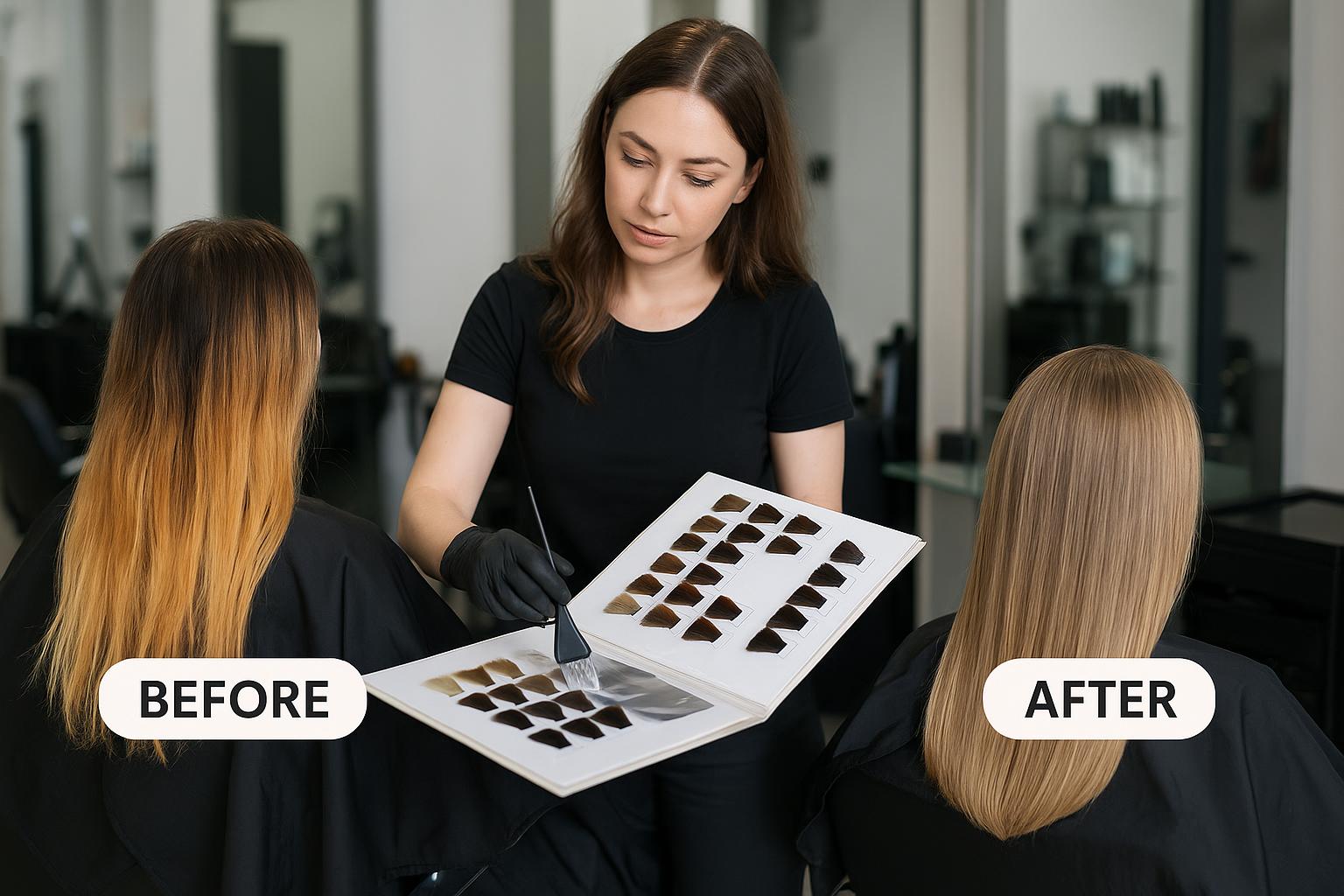
Hair Color Correction in Beverley: Fixing Hair Color Disasters
Had a hair color disaster? Learn everything about professional color correction services in Beverley and how expert colorists can restore your hair to its former glory.
Hair Color Correction: Fixing Color Disasters in Beverley
Hair color disasters happen to even the most careful individuals. A box dye that turned out nothing like the picture, an at-home highlight attempt gone wrong, or even a professional color service that didn't deliver the expected results can leave you feeling distressed and unsure how to fix the problem. Color correction—the process of fixing unwanted hair color—requires specialized knowledge, patience, and skill. Unlike straightforward coloring, correction work involves understanding color theory, assessing hair condition, and often executing multi-step processes to safely achieve desired results. For Beverley residents dealing with color mishaps, understanding what color correction involves, what's realistically achievable, and how to find a skilled color correction specialist can help you navigate the path from color disaster to beautiful, healthy hair.
Common Color Correction Scenarios
Color correction encompasses a wide range of situations, each presenting unique challenges and requiring different approaches.
Box dye disasters represent one of the most common correction scenarios. Home hair color often contains metallic salts and unpredictable pigments that don't behave like professional color. The result might be too dark, too red, patchy, or an entirely unexpected color. Box dye also tends to build up on hair over time, creating uneven color and making correction more complex.
Brassy blonde occurs when lightened hair develops unwanted warm tones—yellow, orange, or red hues that make blonde hair look cheap rather than chic. This happens when the underlying pigment in hair isn't fully neutralized during lightening, or when blonde hair oxidizes over time due to heat styling, sun exposure, or mineral buildup from water.
Uneven color results from various causes: previous color that's faded unevenly, overlapping color applications that created darker bands, or DIY highlighting that left some sections lighter than others. This patchiness makes hair look unkempt and unprofessional.
Too-dark color is particularly challenging to correct because removing dark pigment from hair is more difficult than adding color. Whether from box dye that turned out darker than expected or a professional service that went too deep, overly dark hair often requires multiple sessions to lighten safely.
Green hair typically occurs when blonde or light hair is exposed to chlorine, copper from water pipes, or certain color combinations. While shocking to experience, green tones are usually among the easier corrections to address.
Orange or red tones that won't go away often plague people trying to go blonde or lighter brown. These warm undertones are natural pigments in hair that become visible when darker pigment is removed, and neutralizing them requires specific color theory knowledge.
Damaged hair from color presents a dual challenge: correcting the color while also repairing the damage. Hair that's been over-processed, bleached too aggressively, or colored too frequently may be too fragile for immediate correction and require a more gradual approach.
Understanding Color Correction Limitations
Setting realistic expectations is crucial for color correction success. Not everything is immediately fixable, and understanding limitations helps prevent further disappointment.
Hair condition dictates what's possible. Severely damaged hair may not be able to withstand the processes required for dramatic correction. In these cases, gradual correction over multiple sessions, or even cutting off damaged hair and starting fresh, might be the only safe options.
Dark to light transformations take time. You cannot safely go from black box dye to platinum blonde in one session, regardless of how skilled your colorist is. The hair simply cannot withstand that level of processing without sustaining severe damage. These corrections require multiple sessions spaced weeks apart.
Some colors are more difficult to remove than others. Red and black pigments are notoriously stubborn. Permanent black dye, in particular, can take many sessions to remove, and it may never lift completely to very light shades.
Previous chemical treatments affect correction options. Hair that's been relaxed, permed, or straightened may not respond predictably to color correction processes. These chemical treatments alter hair's structure in ways that can interfere with color removal and application.
Natural hair color limits what's achievable. If you have naturally dark brown hair, achieving and maintaining very light blonde requires significant ongoing maintenance. Your natural color will grow in, and your hair will continuously try to revert to warmer tones. Understanding this reality helps you decide whether the maintenance commitment is worth it.
Correction costs more than regular coloring. Color correction is time-intensive, requires advanced skills, and often uses more product than standard color services. Expect to pay significantly more for correction work than you would for straightforward coloring.
The Color Correction Process
Understanding what happens during color correction helps you prepare for the experience and know what to expect.
Consultation is essential. A thorough consultation should precede any correction work. Your colorist needs to understand your hair's history: what products have been used, how many times it's been colored, what chemical treatments it's undergone, and what you've done at home. Be completely honest during this consultation—withholding information can lead to unexpected results or damage.
Hair strand testing often precedes the actual correction. Your colorist may test a small section of hair to see how it responds to the planned treatment. This test reveals how your hair will react, how long processing will take, and whether the planned approach will achieve the desired result.
Color removal might be necessary. For hair with built-up color, especially from box dyes, color remover may be applied before any new color. This product shrinks color molecules so they can be washed out of the hair. Color removal is gentler than bleaching but doesn't lighten natural pigment—it only removes artificial color.
Bleaching may be required for significant lightening or for removing stubborn dark pigments. Professional bleach lightens both artificial and natural pigment. Your colorist will use the appropriate strength and carefully monitor processing to minimize damage.
Toning neutralizes unwanted tones. After lightening, hair often has warm undertones that need to be neutralized. Toners deposit cool pigments that counteract these warm tones, creating the desired shade. Toning is crucial for achieving beautiful blonde, ash brown, or cool-toned colors.
Color application adds the desired shade. Once unwanted color is removed and hair is properly toned, your colorist applies the new color. This might be a single process or might involve multiple colors for dimension and natural appearance.
Deep conditioning treatments are typically included in correction services. These treatments help restore moisture and strength to hair that's undergone intensive processing.
Multiple sessions are often necessary. Your colorist might recommend spacing correction work across several appointments to protect your hair's integrity. While this requires patience, it's far better than damaging your hair by trying to do too much at once.
Maintaining Corrected Color
Once your color is corrected, proper maintenance preserves the results and keeps your hair healthy.
Use professional color-safe products. Drugstore shampoos often contain harsh sulfates that strip color quickly. Professional products are formulated to preserve color while cleaning hair effectively.
Purple shampoo is essential for blonde hair. These products deposit violet pigments that neutralize yellow tones, keeping blonde hair looking fresh between salon visits. Use once or twice weekly, not every wash.
Minimize heat styling. Heat accelerates color fading and can bring back unwanted warm tones in lightened hair. When you do heat style, always use a heat protectant product.
Protect hair from chlorine and hard water. Wet your hair with clean water before swimming to reduce chlorine absorption. Consider installing a shower filter if you have hard water, as mineral buildup can cause color to oxidize and develop brassy tones.
Schedule regular toning appointments. Blonde and light brown hair typically needs toning every 4-6 weeks to maintain cool tones and prevent brassiness.
Deep condition regularly. Color-corrected hair has been through significant processing and needs extra moisture and protein to stay healthy. Use deep conditioning treatments weekly.
Be patient with root growth. If your corrected color is significantly lighter than your natural color, you'll need regular root touch-ups. Discuss a maintenance schedule with your colorist to keep your color looking fresh.
Best Salons for Color Correction in Beverley
Color correction requires advanced skills and experience. Choosing a salon with proven color correction expertise is essential.
De Lacy Hair and Beauty - Editor's Choice
De Lacy Hair and Beauty [blocked] has built a strong reputation for successful color correction work. Their senior colorists have extensive experience fixing color disasters of all types, from box dye mishaps to brassy blonde to uneven color.
What distinguishes De Lacy's approach to color correction is their commitment to hair health throughout the process. They never sacrifice your hair's integrity for the sake of achieving a color quickly. If your hair needs multiple sessions to safely reach your goal, they'll be honest about this and create a plan that protects your hair while gradually achieving the desired result.
The salon's colorists are skilled in color theory and understand how different pigments interact. This knowledge is crucial for color correction, where you're not just adding color but removing unwanted tones and neutralizing underlying pigments.
De Lacy provides thorough consultations before beginning any correction work. They'll assess your hair's condition, discuss what's realistically achievable, explain the process and timeline, and provide honest cost estimates. This transparency helps you make informed decisions about proceeding.
The salon uses high-quality professional products, including bond-building treatments like Olaplex, to protect hair during intensive correction processes. They also provide detailed aftercare instructions and product recommendations to help you maintain your corrected color.
De Lacy's colorists stay current with the latest color correction techniques through ongoing education and training. They're experienced with various correction scenarios and can adapt their approach to your specific situation.
Located at HU17 9AQ, De Lacy welcomes consultations for color correction. They recommend booking a consultation before scheduling the actual correction service, as this allows time to discuss options and plan the best approach without the pressure of an immediate appointment.
A Unique Salon
A Unique Salon [blocked] offers color correction services with experienced colorists who can address various color challenges. Their team understands the complexities of correction work and can help you achieve improved results.
Regents of Beverley
Regents of Beverley [blocked] provides professional color correction services with attention to both achieving desired color and maintaining hair health. Their colorists are skilled at assessing color situations and recommending appropriate correction approaches.
Preventing Future Color Disasters
Once you've gone through color correction, you'll want to avoid repeating the experience. These strategies help prevent future color mishaps.
Avoid box dye. The money you save on box color will be spent many times over on correction if things go wrong. Professional color is formulated differently and applied with expertise that home color cannot match.
Don't try complex color at home. Simple root touch-ups might be manageable at home, but anything more complex—highlights, significant color changes, or correcting previous color—should be left to professionals.
Communicate clearly with your colorist. Bring photos showing what you want and what you definitely don't want. Be specific about your concerns and preferences.
Be honest about your hair history. Tell your colorist everything that's been done to your hair, even if you're embarrassed about a DIY disaster. They need this information to avoid problems.
Follow professional advice. If your colorist recommends a gradual approach to achieving your desired color, trust their expertise. Trying to rush the process leads to damage and disappointment.
Maintain your color properly. Use recommended products, protect your hair from environmental damage, and schedule regular maintenance appointments. Proper care prevents color from deteriorating to the point where correction is needed.
Choose realistic goals. If you have naturally dark hair, maintaining very light blonde requires significant commitment. Consider whether you're truly willing to invest the time and money required for maintenance.
The Emotional Side of Color Correction
Color disasters can be emotionally distressing. Your hair is part of your identity, and when it doesn't look the way you want, it affects your confidence and self-image.
It's normal to feel upset, frustrated, or even angry about a color disaster. These feelings are valid, and a good colorist will understand and empathize with your distress.
However, try to maintain perspective. Hair color is fixable. It might take time, patience, and money, but skilled colorists can correct almost any color situation. Your hair will not look this way forever.
Avoid making impulsive decisions in the immediate aftermath of a color disaster. Don't immediately try to fix it yourself with more box dye, and don't rush to cut off all your hair. Take a day or two to calm down, then schedule a consultation with a professional color correction specialist.
Be patient with the correction process. If your colorist recommends multiple sessions, trust their judgment. Trying to rush correction often leads to more damage and potentially worse results.
Focus on the end goal rather than dwelling on the current situation. In a few weeks or months, your hair will look beautiful, and this disaster will be just a story you tell about that time your hair went wrong.
Moving Forward
Color correction represents a fresh start—an opportunity to achieve the hair color you've always wanted, maintained properly this time with professional guidance.
Once your color is corrected, establish a relationship with your colorist. Regular appointments for maintenance, toning, and touch-ups keep your color looking fresh and prevent problems from developing.
View your corrected color as an investment worth protecting. The time, money, and patience required for correction make it worthwhile to maintain the results properly rather than letting your color deteriorate again.
Consider your color correction experience a learning opportunity. You now understand the importance of professional color services, proper maintenance, and realistic expectations. This knowledge will serve you well throughout your hair color journey.
Most importantly, enjoy your corrected color. After the stress and disappointment of a color disaster, having beautiful hair that makes you feel confident is worth celebrating. Your patience and investment in professional correction have paid off, and you can move forward with hair you love.
Dealing with a color disaster? Book a consultation at De Lacy Hair and Beauty [blocked] to discuss correction options with experienced colorists who can safely restore your hair to beautiful, healthy color.
Share this article
You might also like
More articles on hair color and related topics
Blonde Hair Maintenance: Keeping Your Blonde Beautiful in Beverley
Keep your blonde hair looking salon-fresh with expert maintenance tips from Beverley's top colorists. Say goodbye to brassiness and hello to gorgeous blonde locks.
Bridal Hair Trials in Beverley: Everything You Need to Know
Plan the perfect wedding hair with our comprehensive guide to bridal hair trials. Learn what to expect, how to prepare, and find the best bridal stylists in Beverley.
Olaplex vs Wellaplex: Comparing Bond-Building Hair Treatments
Discover the differences between Olaplex and Wellaplex bond-building treatments and which one is right for repairing and strengthening your hair.