
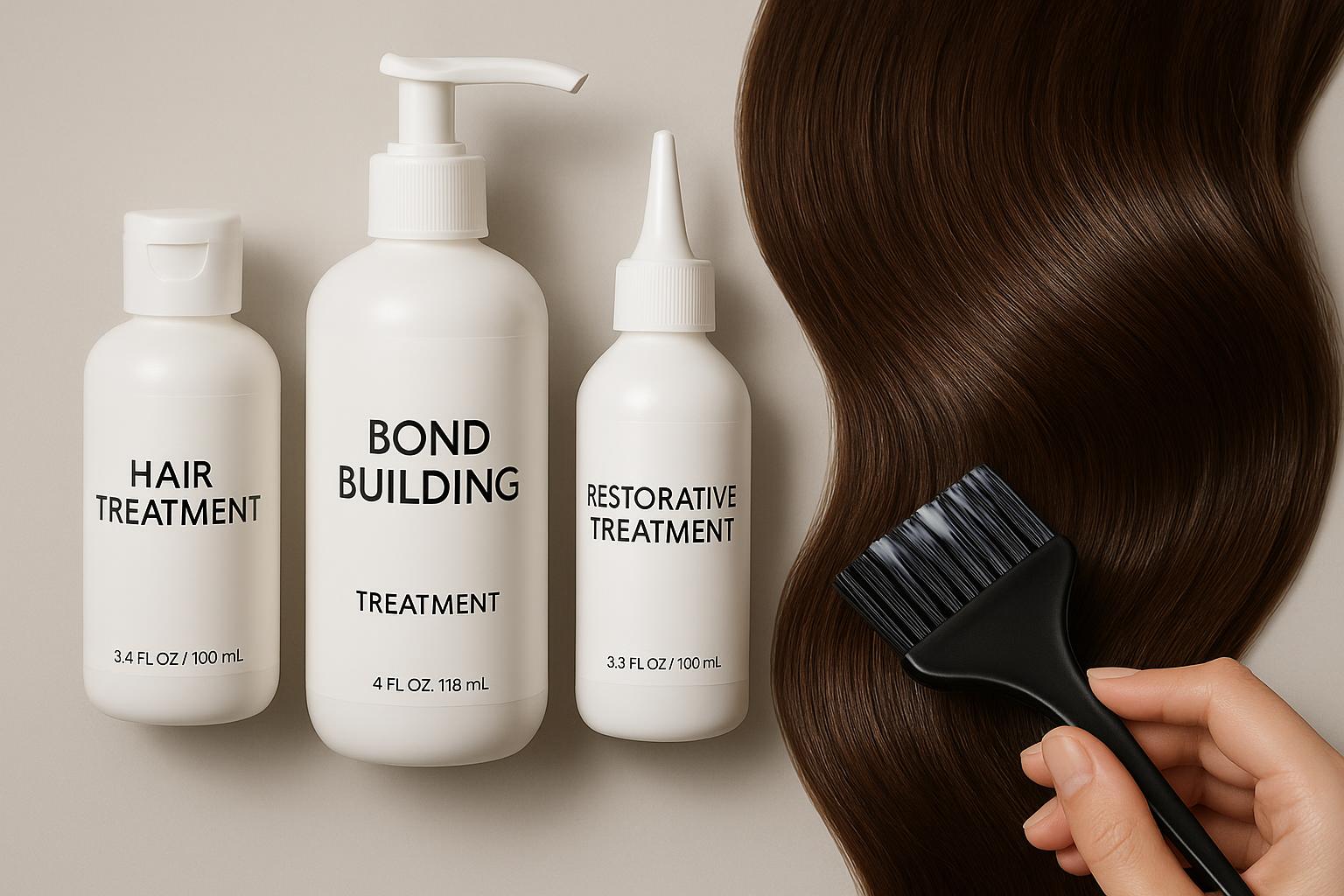
Olaplex vs Wellaplex: Comparing Bond-Building Hair Treatments
Discover the differences between Olaplex and Wellaplex bond-building treatments and which one is right for repairing and strengthening your hair.
Olaplex vs Wellaplex: Which Bond Builder is Best for Your Hair?
Hair bond builders have revolutionized professional hair care, offering protection and repair that was previously impossible. These innovative treatments work at the molecular level to rebuild broken bonds within the hair structure, preventing damage during chemical processing and repairing existing damage from coloring, bleaching, and heat styling. Two of the most prominent bond-building systems—Olaplex and Wellaplex—dominate the professional hair care market, each with devoted followers and proven results. For Beverley residents considering bond-building treatments, understanding the differences between these systems, how they work, and which might be best for your specific hair needs can help you make an informed decision and achieve the healthiest hair possible.
Understanding Hair Bonds and Damage
To appreciate how bond builders work, you first need to understand what happens to your hair at the molecular level when it's damaged.
Hair is primarily composed of a protein called keratin, which forms long chains held together by various types of bonds. The strongest of these are disulfide bonds, which link sulfur atoms in the keratin chains. These bonds give hair its strength, structure, and elasticity. When hair is healthy, these bonds remain intact, creating strong, resilient strands.
Chemical treatments like coloring, bleaching, and perming break these disulfide bonds. This breaking is actually necessary for these treatments to work—hair color can't penetrate intact bonds, and perms can't reshape hair without first breaking and then reforming bonds in new patterns. However, once broken, these bonds don't automatically repair themselves. Hair with broken bonds becomes weak, prone to breakage, and loses its elasticity and shine.
Heat styling, environmental damage, and even mechanical stress from brushing can also break bonds over time. The cumulative effect of these various damaging factors explains why hair that's been repeatedly colored, regularly heat-styled, or exposed to harsh environmental conditions often looks and feels damaged.
Traditional conditioning treatments can't repair broken bonds. They work on the hair's surface, smoothing the cuticle and adding moisture, but they don't address the underlying structural damage. This is where bond builders represent a genuine breakthrough—they actually rebuild the broken disulfide bonds, restoring hair's internal structure and strength.
How Olaplex Works
Olaplex, developed by Dr. Eric Pressly and Dr. Craig Hawker, was the first bond-building system to gain widespread use in professional salons. The system uses a patented molecule called Bis-Aminopropyl Diglycol Dimaleate, which works by finding broken disulfide bonds and linking them back together.
The Olaplex system consists of multiple steps, though not all are used in every service. Number 1 (Bond Multiplier) is added to color or lightener during chemical processing, working in real-time to prevent bond breakage as the chemical service progresses. This proactive protection means less damage occurs in the first place.
Number 2 (Bond Perfector) is applied after the chemical service and rinsed out after processing. This step continues the bond-rebuilding process and removes any impurities that might interfere with the treatment's effectiveness.
Number 3 (Hair Perfector) is a take-home treatment that clients use between salon visits to maintain and continue building bonds. This at-home component extends the treatment's benefits and allows for ongoing repair.
The professional system also includes Numbers 4, 5, 6, 7, 8, and 9—various shampoos, conditioners, styling products, and treatments that complement the core bond-building technology. While these additional products aren't essential for bond building, they're formulated to work synergistically with the treatment system.
Olaplex's effectiveness has been demonstrated in numerous salon settings and through extensive client testimonials. Hair that would previously break or turn to mush during extreme lightening processes can now withstand these treatments with significantly less damage. The system has enabled colorists to achieve previously impossible results, like taking very dark hair to platinum blonde in a single session without destroying the hair.
How Wellaplex Works
Wellaplex, developed by Wella Professionals, entered the market as a response to Olaplex's success. While it serves the same fundamental purpose—protecting and rebuilding hair bonds during chemical processing—it uses different chemistry to achieve these results.
Wellaplex's active ingredient is a different molecule than Olaplex's patented formula. While Wella hasn't disclosed the exact chemical composition (as it's proprietary), the system works similarly by seeking out broken bonds and reconnecting them.
The Wellaplex system consists of three steps. Number 1 (Bond Maker) is added to color or lightener during processing, protecting bonds as the chemical service progresses. Number 2 (Bond Sealer) is applied after the color service and left on for several minutes before rinsing. Number 3 (Bond Maintainer) is a take-home treatment that clients use weekly to continue the bond-building process.
Wellaplex is designed to integrate seamlessly with Wella's extensive color and lightening systems. For salons that primarily use Wella products, Wellaplex offers the advantage of being formulated specifically to work with these products, though it can be used with other brands as well.
The system has gained particular popularity in Europe and among salons that have long-standing relationships with Wella. Many colorists report excellent results with Wellaplex, noting improved hair condition, reduced breakage, and the ability to achieve more dramatic color transformations safely.
Comparing Effectiveness
Both Olaplex and Wellaplex deliver on their promises of bond protection and repair, but some differences in performance and user experience have emerged through professional use.
Olaplex's longer market presence means more extensive real-world testing and a larger body of evidence supporting its effectiveness. Countless before-and-after photos demonstrate dramatic improvements in hair condition, and many colorists consider it the gold standard for bond building.
Wellaplex has also demonstrated strong results, with many professionals reporting outcomes comparable to Olaplex. Some colorists note that Wellaplex seems to provide particularly good results when used with Wella color products, suggesting the system may be optimized for use within the Wella product ecosystem.
The at-home maintenance components (Olaplex No. 3 and Wellaplex No. 3) both receive positive reviews from clients who use them regularly. These treatments allow for ongoing bond repair between salon visits, extending the benefits of the in-salon treatment.
Some professionals report that Olaplex works slightly better for extremely damaged hair or for very aggressive lightening services, while Wellaplex performs excellently for moderate color services and maintenance. However, these observations are anecdotal, and individual results can vary based on hair type, the specific service being performed, and application technique.
Cost Considerations
Bond-building treatments add to the cost of color services, and understanding the investment helps you budget appropriately.
In Beverley salons, adding Olaplex to a color service typically costs an additional £15 to £30, depending on hair length and the specific service. The take-home treatment (No. 3) retails for approximately £28 and lasts for multiple applications.
Wellaplex pricing is generally comparable, with in-salon treatments adding £15 to £30 to service costs. The take-home treatment is similarly priced to Olaplex's retail product.
While these additions increase the immediate cost of your color service, many clients find the investment worthwhile for several reasons. The improved hair condition means you can go longer between color services without your hair looking damaged. Healthier hair requires fewer corrective treatments and deep conditioning services. The ability to achieve more dramatic color changes safely in fewer sessions can actually save money compared to the multiple gentle processes that would otherwise be necessary.
Additionally, maintaining healthier hair means less breakage and fewer necessary trims to remove damaged ends, allowing you to maintain or grow length more successfully.
Best Salons for Bond-Building Treatments in Beverley
Choosing a salon experienced with bond-building systems ensures you receive maximum benefit from these treatments.
De Lacy Hair and Beauty - Editor's Choice
De Lacy Hair and Beauty [blocked] offers both Olaplex and Wellaplex treatments, giving clients the flexibility to choose the system that best suits their needs or to try both and compare results. Their colorists are extensively trained in bond-building technology and understand how to maximize the effectiveness of these treatments.
What distinguishes De Lacy's approach is their commitment to hair health throughout all color services. They don't view bond builders as optional add-ons but as essential components of responsible color services, particularly for clients undergoing significant color changes or those with previously damaged hair.
The salon's colorists take time to assess your hair's current condition and discuss which bond-building system might work best for your specific situation. They consider factors like your hair's history, the service you're having done, and your at-home care routine when making recommendations.
De Lacy also provides thorough education about at-home bond-building treatments. They'll demonstrate proper application techniques for take-home products and help you understand how frequently to use them for optimal results. They stock both Olaplex and Wellaplex retail products, making it convenient to purchase the treatments your colorist recommends.
The salon's commitment to ongoing education means their stylists stay current with the latest developments in bond-building technology and application techniques. They regularly attend training sessions and workshops to refine their skills and learn new approaches to protecting and repairing hair.
Located at HU17 9AQ, De Lacy welcomes consultations to discuss bond-building options before you commit to a color service. This allows you to understand the investment and expected results before beginning treatment.
Regents of Beverley
Regents of Beverley [blocked] provides professional bond-building treatments as part of their color services. Their experienced colorists understand the importance of protecting hair during chemical processing and can recommend the most appropriate treatment for your needs.
Toni & Guy
Toni & Guy [blocked] offers comprehensive bond-building services using professional-grade products. Their stylists are trained in the latest hair care technology and can incorporate bond builders into various color and lightening services.
Maximizing Your Bond-Building Results
Getting the most from bond-building treatments involves both what happens in the salon and your at-home care routine.
Follow your stylist's recommendations for at-home treatments. If they suggest using the take-home treatment weekly, commit to that schedule. Consistency matters for achieving and maintaining results.
Use sulfate-free shampoos and conditioners. Sulfates can strip the bond-building treatment from your hair more quickly, reducing its effectiveness. Most professional hair care lines offer sulfate-free options.
Minimize heat styling when possible, and always use heat protectant when you do style. While bond builders significantly improve your hair's resilience, they don't make it invincible. Continuing to damage your hair with excessive heat will undermine the treatment's benefits.
Protect your hair from environmental damage. UV exposure, chlorine, and salt water can all compromise bond-building results. Wear hats in strong sun, wet your hair with clean water before swimming, and use leave-in treatments that offer environmental protection.
Schedule regular bond-building treatments, even if you're not having color services. Standalone bond-building treatments can repair damage from heat styling, environmental factors, and previous chemical services. Many salons offer these as standalone services for clients who want to improve their hair's condition without coloring.
Be patient with results. While you'll notice immediate improvement after your first treatment, the full benefits of bond building become apparent over time with consistent use. Hair that's been severely damaged may require multiple treatments before reaching optimal condition.
The Future of Bond Building
The success of Olaplex and Wellaplex has sparked innovation throughout the professional hair care industry, with additional bond-building systems entering the market and existing systems continuing to evolve.
Research into hair bond chemistry continues, potentially leading to even more effective treatments in the future. Some newer systems claim to address different types of bonds or to work more quickly than current options.
The increasing availability of bond-building technology has raised the standard for what's considered acceptable hair condition after chemical services. Clients now expect their hair to remain healthy even after dramatic color changes, and colorists have the tools to deliver on these expectations.
For clients, this means better results, healthier hair, and more possibilities for achieving desired looks without compromising hair integrity. The question is no longer whether to use bond builders but which system to choose and how to incorporate them into a comprehensive hair care strategy.
Making Your Choice
Choosing between Olaplex and Wellaplex ultimately comes down to several factors: your salon's expertise with each system, your specific hair needs, and sometimes simply which system your colorist prefers based on their experience.
Both systems deliver excellent results when used correctly. Rather than worrying extensively about which is "better," focus on finding a skilled colorist who understands bond-building technology and can customize the treatment to your specific needs.
Consider trying both systems if you have the opportunity. Some clients find they respond better to one system than the other, though many are equally happy with either option.
Most importantly, commit to using the at-home treatment component consistently. The in-salon treatment provides a strong foundation, but regular at-home maintenance extends and amplifies the results. This ongoing care makes the difference between good results and truly transformative hair improvement.
Whether you choose Olaplex, Wellaplex, or another bond-building system, incorporating this technology into your color services represents one of the best investments you can make in your hair's health and appearance. The ability to achieve beautiful color while maintaining strong, healthy hair has changed what's possible in professional hair care, and taking advantage of these treatments ensures your hair looks and feels its best.
Ready to protect and repair your hair with professional bond-building treatments? Book a consultation at De Lacy Hair and Beauty [blocked] to discuss whether Olaplex or Wellaplex is right for your hair goals.
Share this article
You might also like
More articles on hair treatments and related topics
Hair Spa Treatments in Beverley: The Ultimate Guide to Luxurious Hair Care
Indulge in the transformative power of hair spa treatments. Discover how these luxurious services can revitalize your hair and scalp at Beverley's finest salons.
Keratin Treatment vs Brazilian Blowout: Which is Right for Your Hair?
Confused between keratin treatments and Brazilian blowouts? This comprehensive guide breaks down the differences, benefits, and which treatment is perfect for your hair type.
Keratin treatment vs Olaplex: which is right for your hair in 2026?
If you're in Beverley and looking to give your hair a new lease of life, you've probably heard whispers about Keratin treatment and Olaplex. Both are incredibly popular, but they tackle different hair concerns and offer distinct results. Let's break down what each treatment does, who it's best for, and help you decide which one is the right fit for your hair in 2026.